
Start Here
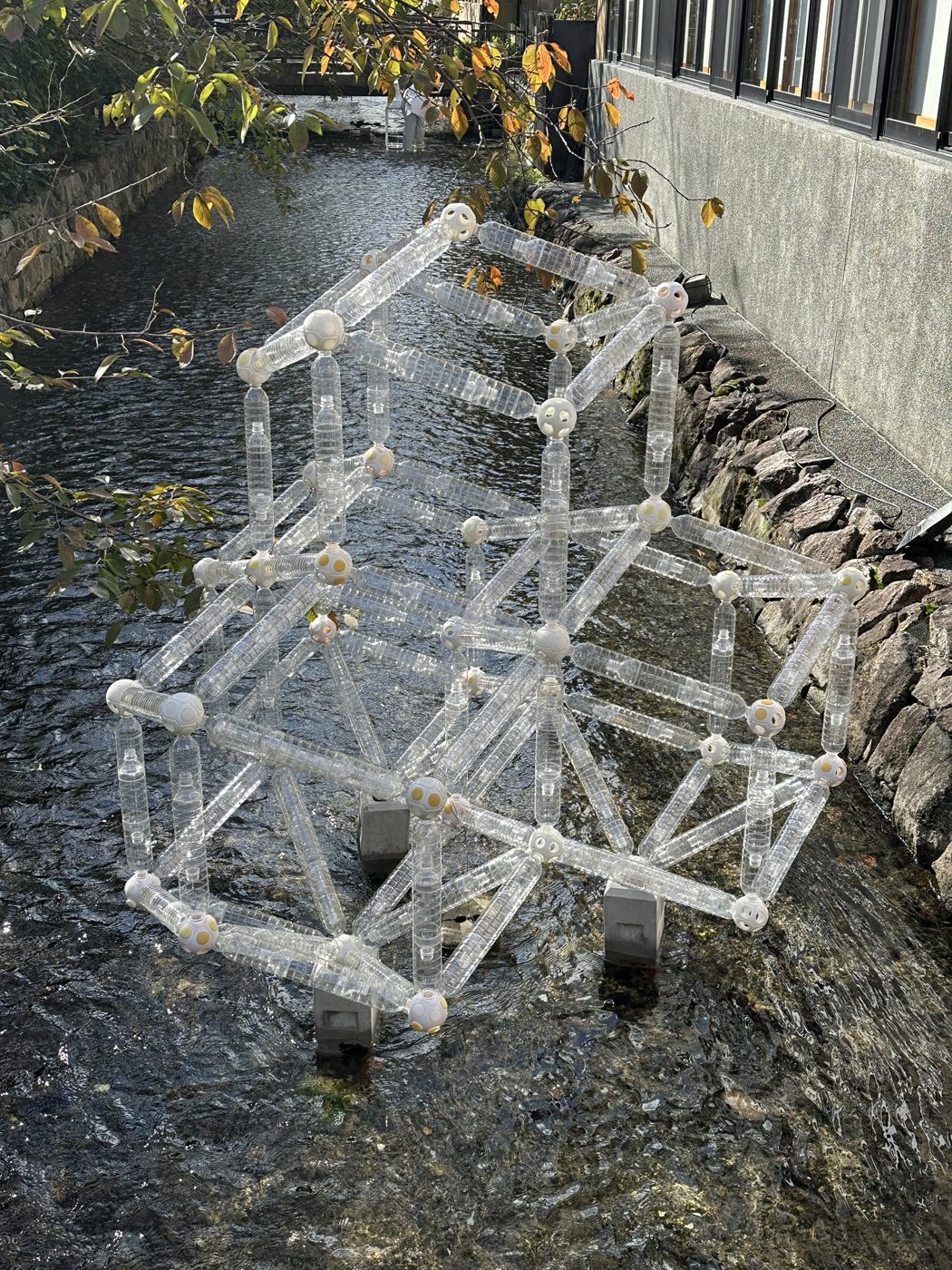
DICTO is a sculptor in Osaka. He builds from recycled PET bottles, and the shapes he builds lead into questions nobody had answered. You need no mathematics to follow. Three rules carry the whole project.
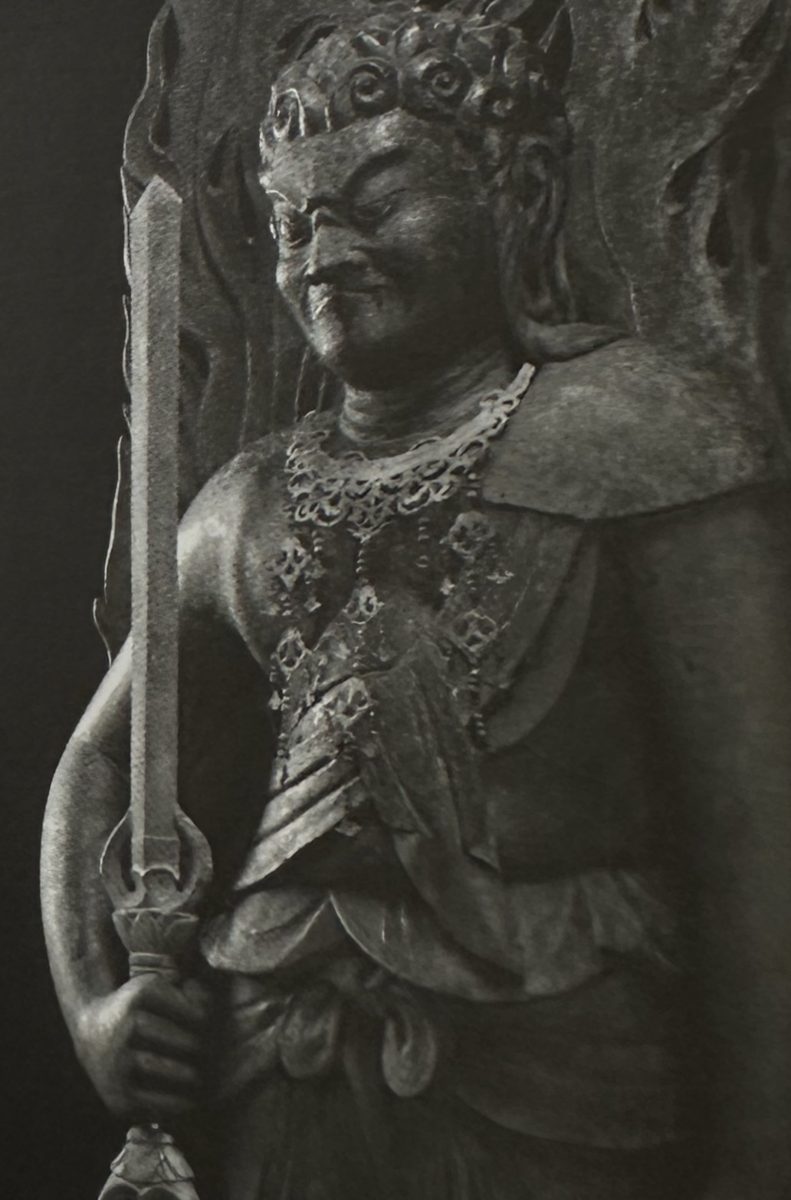
Before the bottles there was stone and wood. DICTO trained as a stonemason, a Buddhist statue wood-carver and a restoration technician. Under the master carver Hōju Hase he helped restore an ancient wooden statue attributed to Kōbō Daishi (Kūkai), and his name is recorded beneath it among the Buddhist sculptors who carried out the work.
1There are five perfect shapes
Take one flat shape, the same every time, and build a closed solid where every corner looks the same. It can be done in exactly five ways, and no more. They are the five dice in a role-playing set. DICTO's name carries them, one letter each: Dodecahedron, Icosahedron, Cube, Tetrahedron, Octahedron.
12 pentagons
the whole
20 triangles
water
6 squares
earth
4 triangles
fire
8 triangles
air
The word: Platonic solids. Plato wrote about them around 360 BC and matched them to the elements, the colours above: fire the tetrahedron, air the octahedron, water the icosahedron, earth the cube, and the dodecahedron for the whole. The proof that there are only five is in Euclid.
2Fill space with no gaps
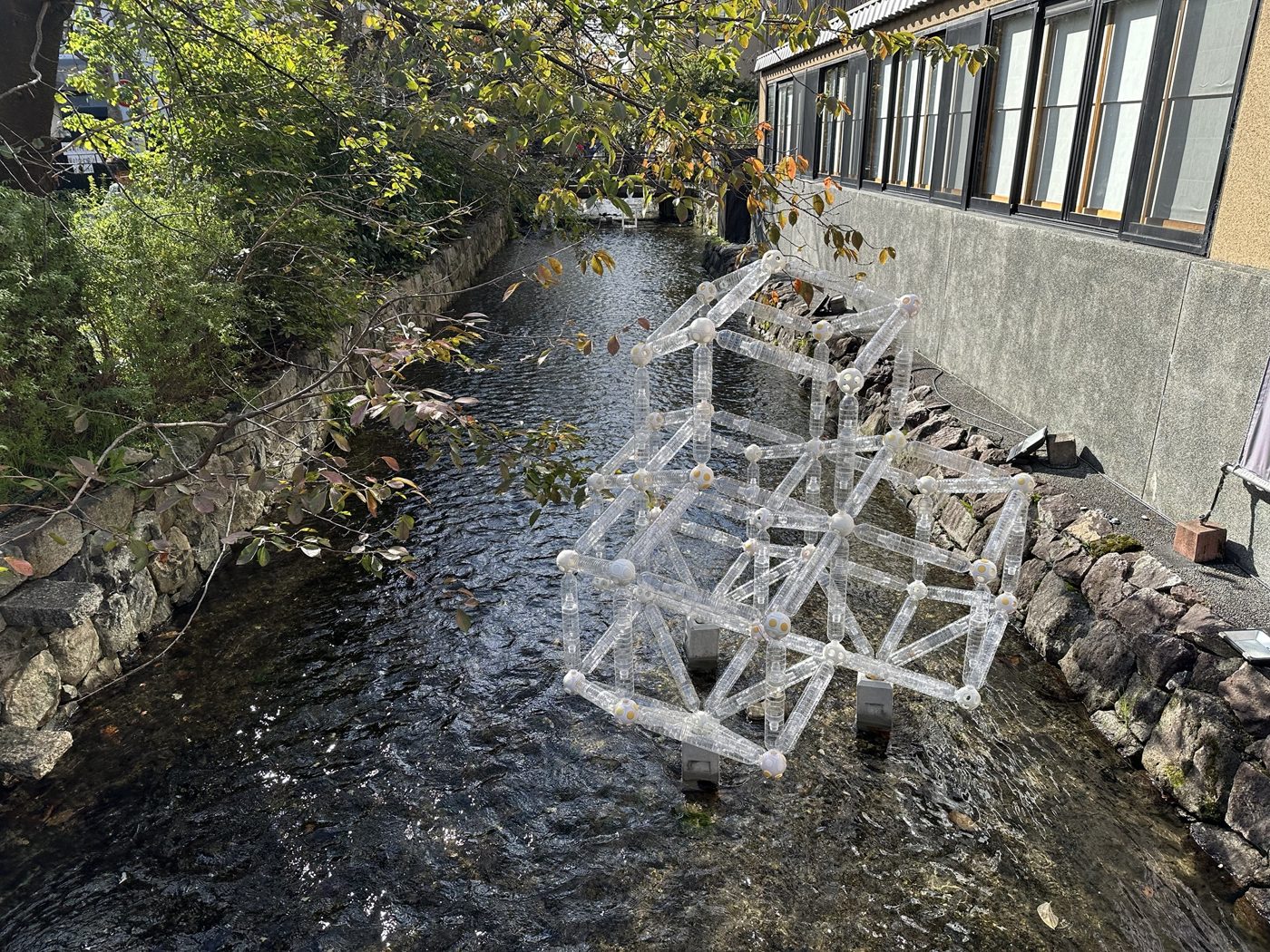
Squares cover a bathroom floor: four meet at every corner and close up. Pentagons cannot: three leave a gap, four overlap. The same holds one step up. Pack a car boot so perfectly that no air is left between the boxes, and you have filled space. Of the five perfect shapes, only the cube does it alone. Tetrahedra and octahedra do it together, two to one, the frame of many roofs and climbing frames.
Most shapes cannot fill space. DICTO hunts for the ones that can, and has found new ones: the HexOct pieces, and Narcissus, a single piece that fills space all by itself.
The words: tiling (a floor), space-filling (a room), octet (tetrahedra and octahedra together).
3Layers can stack in any order
Stack oranges on a market stall: each new layer sits in the dips of the one below. There are only three places a layer can sit, A, B and C. Look at any layer and its two neighbours. If they match (…A B A…) the layer turns back: call it h. If they differ (…A B C…) it carries straight on: call it c.
Every string of c's and h's is a stacking that can be built, and real crystals use many of them. DICTO found what stays the same whatever the order. One example: in the diamond-like network built on any stacking, every atom sits on exactly the same number of closed loops of each length (the Loop Equality, paper #102). And DICTO turned the rule into cloth: in Knitting Crystals (#83) the knitted sheets are the layers, and the linking yarns run straight on at a c layer and turn back at an h layer, so the fabric is the crystal.
The words: close-packed layers, stacking, hexagonality (the share of h layers).
Try it with your hands
Print the sheet below at 100%, cut, fold and glue, or download Build the Five, a kit of all five perfect shapes and the rhombic dodecahedron, one A4 page each. You get a tetrahedron and an octahedron with the same edge. Make two tetrahedra and one octahedron, and you hold rule 2: they fit face to face with no gaps, and the pattern goes on for ever.